
Booster 6 dual deployment
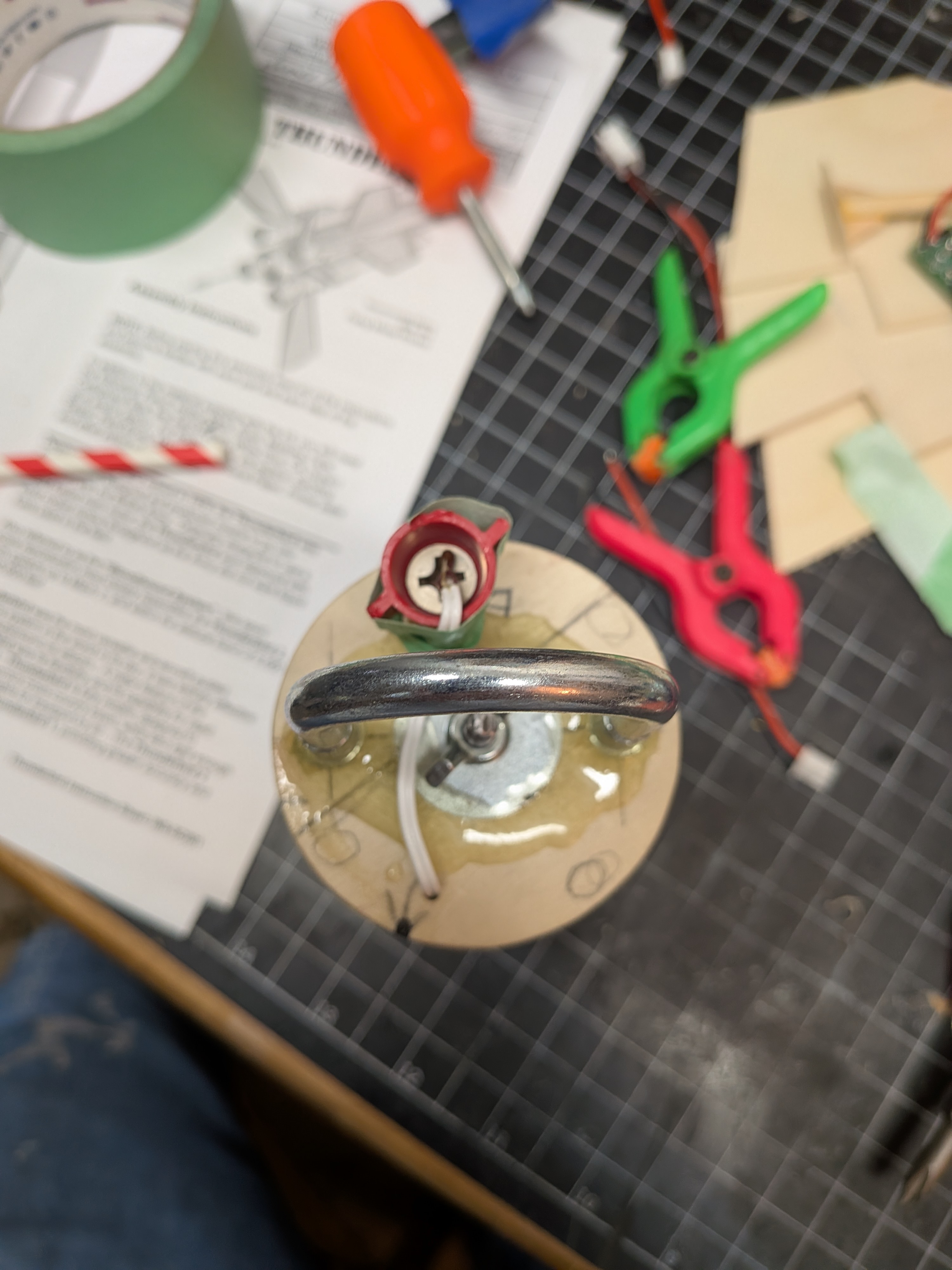
Quote from oliverhub on August 18, 2026, 11:47 amOn the subject of charge wells: My 1st attempt with Booster 5 was made with a plastic wire nut. Maximum volume of 1.2g, proved effective in both ground tests and actual flight. I have built an e-bay for my Optima using the same materials.
I have some ground testing to do to verify the size of the charge is adequate, but if the weather is good, I hope to fly at BARC on Saturday.
On the subject of charge wells: My 1st attempt with Booster 5 was made with a plastic wire nut. Maximum volume of 1.2g, proved effective in both ground tests and actual flight. I have built an e-bay for my Optima using the same materials.
I have some ground testing to do to verify the size of the charge is adequate, but if the weather is good, I hope to fly at BARC on Saturday.
Uploaded files: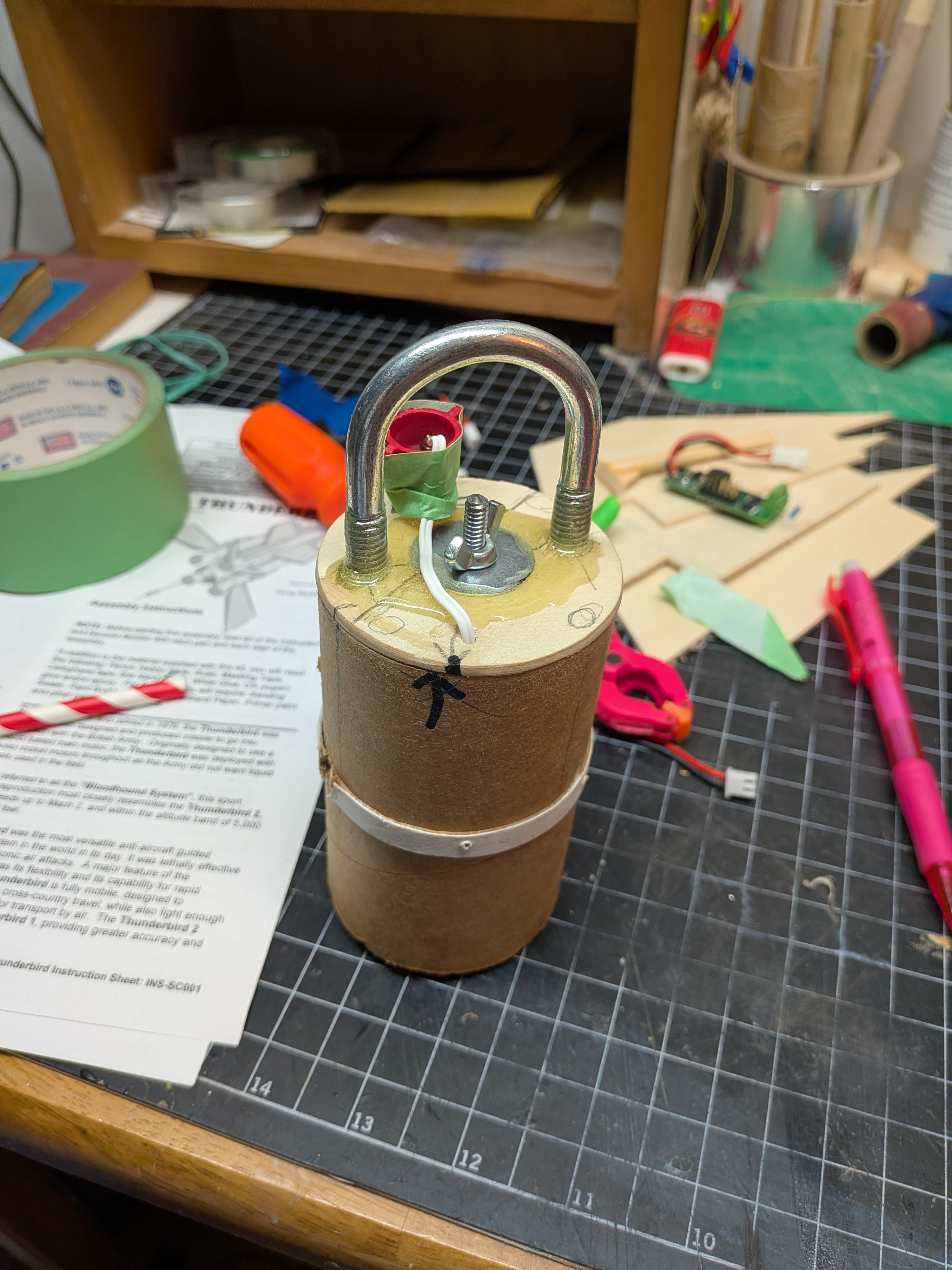

Quote from Admin on August 18, 2026, 12:32 pmQuote from oliverhub on August 18, 2026, 11:47 amOn the subject of charge wells: My 1st attempt with Booster 5 was made with a plastic wire nut. Maximum volume of 1.2g, proved effective in both ground tests and actual flight. I have built an e-bay for my Optima using the same materials.
The wire nut held up? If it doesn't at least it's a cheap replaceable part.
I have some ground testing to do to verify the size of the charge is adequate, but if the weather is good, I hope to fly at BARC on Saturday.
I'm hoping to fly there on Saturday too. I've got my fingers and my toes crossed hoping that the weather will not be a factor.
Quote from oliverhub on August 18, 2026, 11:47 amOn the subject of charge wells: My 1st attempt with Booster 5 was made with a plastic wire nut. Maximum volume of 1.2g, proved effective in both ground tests and actual flight. I have built an e-bay for my Optima using the same materials.
The wire nut held up? If it doesn't at least it's a cheap replaceable part.
I have some ground testing to do to verify the size of the charge is adequate, but if the weather is good, I hope to fly at BARC on Saturday.
I'm hoping to fly there on Saturday too. I've got my fingers and my toes crossed hoping that the weather will not be a factor.
Quote from oliverhub on August 18, 2026, 12:56 pmYes, the little plastic cup fired 1st 0.5 g charge and then 1.0 for successful ground test. Actual then again in flight was also 1.0 g in a BT60 airframe. The cup is only a little charred and will fly again.
The Optima is 2" diameter. I will try to video the ground test with 1.2g
My Booster 6 design will have 2.6" diameter and need a bigger charge than can fit in the wire nut. Maybe I just need bigger nuts?
Yes, the little plastic cup fired 1st 0.5 g charge and then 1.0 for successful ground test. Actual then again in flight was also 1.0 g in a BT60 airframe. The cup is only a little charred and will fly again.
The Optima is 2" diameter. I will try to video the ground test with 1.2g
My Booster 6 design will have 2.6" diameter and need a bigger charge than can fit in the wire nut. Maybe I just need bigger nuts?
Uploaded files: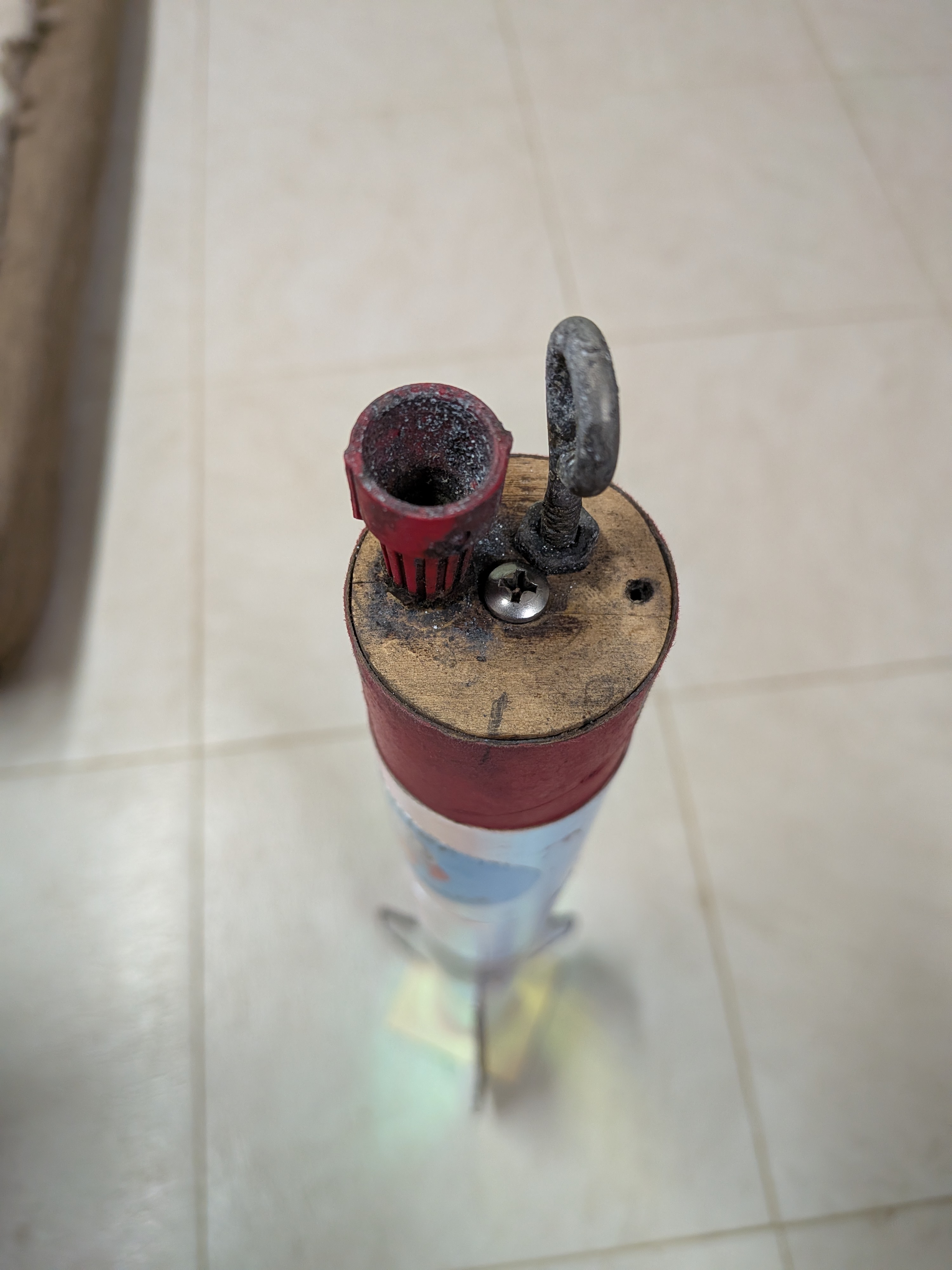
Quote from oliverhub on August 19, 2026, 8:21 pmReturning to the original reason for this post. During the recovery of Booster 5 it fell from 860 ft. until the main charge fired at 500 ft. with only a 2'-inch-wide streamer for a drogue. Using open rocket sim says the tiny streamer allowed the rocket to fall 40+ m/s or about 90mph until the main charge fired. I find this unsupported and excessive since the rocket survived ground impact with no parachute. I do, however, believe the speed was sufficient to pull the parachute snap swivel off the harness even if it only partially opened. The challenge I am working with is strength vs. weight. The open rocket sim is not helping to determine just what load the main chute is likely to experience, since this sim has bad data, I don't know the actual drogue decent velocity. Are there any "basic formulas" that one could use to determine shock load estimates based on altitude and mass of rocket. I don't want to add a bigger drogue than is needed, in fact in these smaller builds (under 3 lbs) I am tempted to go without a drogue when under 1000' apogee.
ultimately, i hope to find cheap durable items hardware that doesn't weigh more than necessary to survive the load. like thin wall cardboard body tubes and thin wood fins.
Returning to the original reason for this post. During the recovery of Booster 5 it fell from 860 ft. until the main charge fired at 500 ft. with only a 2'-inch-wide streamer for a drogue. Using open rocket sim says the tiny streamer allowed the rocket to fall 40+ m/s or about 90mph until the main charge fired. I find this unsupported and excessive since the rocket survived ground impact with no parachute. I do, however, believe the speed was sufficient to pull the parachute snap swivel off the harness even if it only partially opened. The challenge I am working with is strength vs. weight. The open rocket sim is not helping to determine just what load the main chute is likely to experience, since this sim has bad data, I don't know the actual drogue decent velocity. Are there any "basic formulas" that one could use to determine shock load estimates based on altitude and mass of rocket. I don't want to add a bigger drogue than is needed, in fact in these smaller builds (under 3 lbs) I am tempted to go without a drogue when under 1000' apogee.
ultimately, i hope to find cheap durable items hardware that doesn't weigh more than necessary to survive the load. like thin wall cardboard body tubes and thin wood fins.
Uploaded files: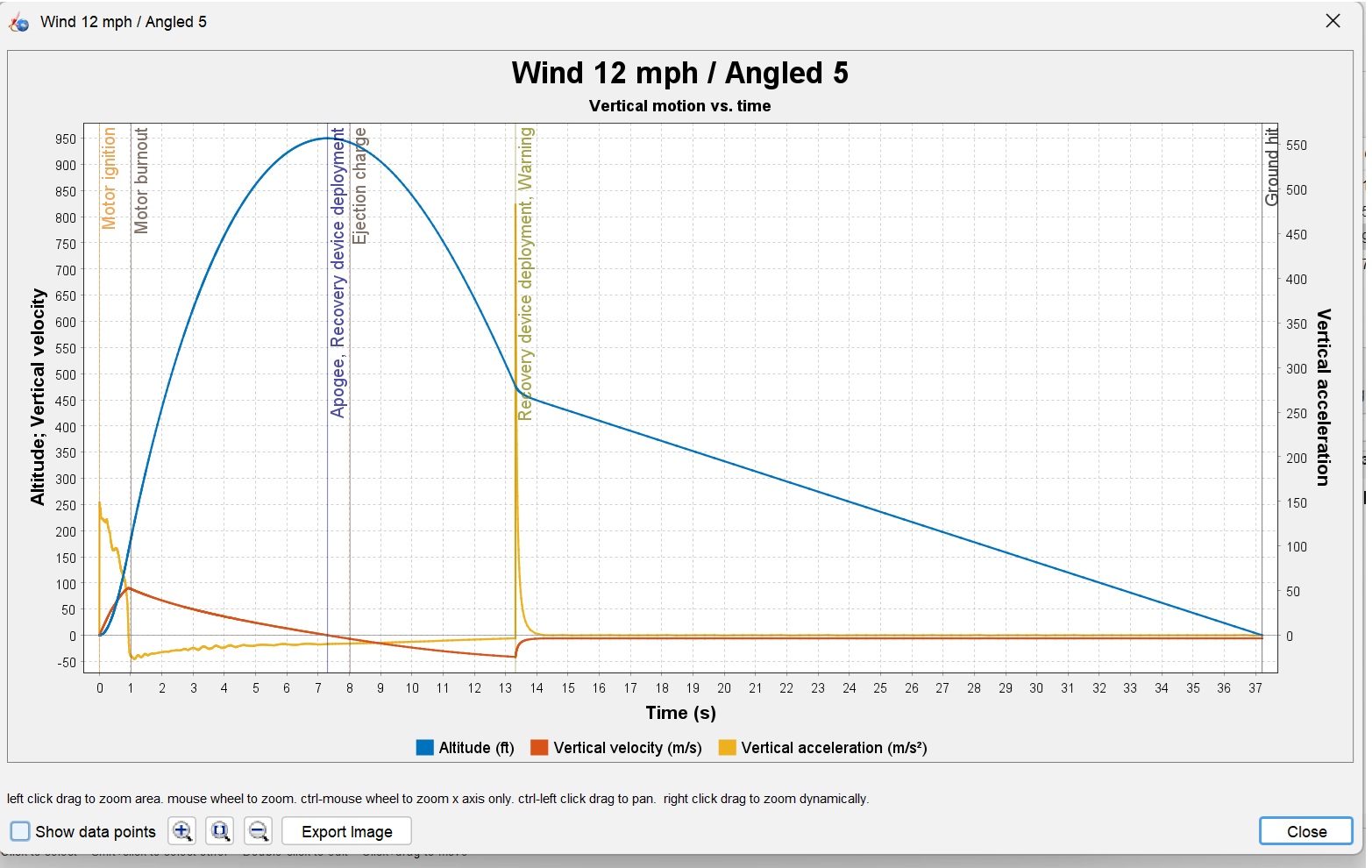

Quote from Eric Becher on August 19, 2026, 8:56 pmOpen Rocket is not good at predicting descent of a rocket after ejection, without a parachute. Streamers aren't well accounted for either. This from one of its developers on TRF. So take that freefall speed with a very large grain of salt.
As for a different source, I have no clue. I don't know if Rocksim would be any better, but you could ask Timmy Van Gilligan how accurate his program is. As I understand it, that's a difficult number to calculate based on design info.
But my guess is that you'd be best off at guessing the speed of descent, at least until you can fly it with an altimeter that measures it. 30 or 40mph? That, times weight gives momentum. Altitude shouldn't really be a factor since the separated rocket should reach terminal velocity fairly quickly.
Open Rocket is not good at predicting descent of a rocket after ejection, without a parachute. Streamers aren't well accounted for either. This from one of its developers on TRF. So take that freefall speed with a very large grain of salt.
As for a different source, I have no clue. I don't know if Rocksim would be any better, but you could ask Timmy Van Gilligan how accurate his program is. As I understand it, that's a difficult number to calculate based on design info.
But my guess is that you'd be best off at guessing the speed of descent, at least until you can fly it with an altimeter that measures it. 30 or 40mph? That, times weight gives momentum. Altitude shouldn't really be a factor since the separated rocket should reach terminal velocity fairly quickly.
Quote from Admin on August 20, 2026, 12:47 pmQuote from oliverhub on August 19, 2026, 8:21 pmReturning to the original reason for this post. During the recovery of Booster 5 it fell from 860 ft. until the main charge fired at 500 ft. with only a 2'-inch-wide streamer for a drogue. Using open rocket sim says the tiny streamer allowed the rocket to fall 40+ m/s or about 90mph until the main charge fired. I find this unsupported and excessive since the rocket survived ground impact with no parachute. I do, however, believe the speed was sufficient to pull the parachute snap swivel off the harness even if it only partially opened.
What had you used for a swivel?
Quote from oliverhub on August 19, 2026, 8:21 pmReturning to the original reason for this post. During the recovery of Booster 5 it fell from 860 ft. until the main charge fired at 500 ft. with only a 2'-inch-wide streamer for a drogue. Using open rocket sim says the tiny streamer allowed the rocket to fall 40+ m/s or about 90mph until the main charge fired. I find this unsupported and excessive since the rocket survived ground impact with no parachute. I do, however, believe the speed was sufficient to pull the parachute snap swivel off the harness even if it only partially opened.
What had you used for a swivel?
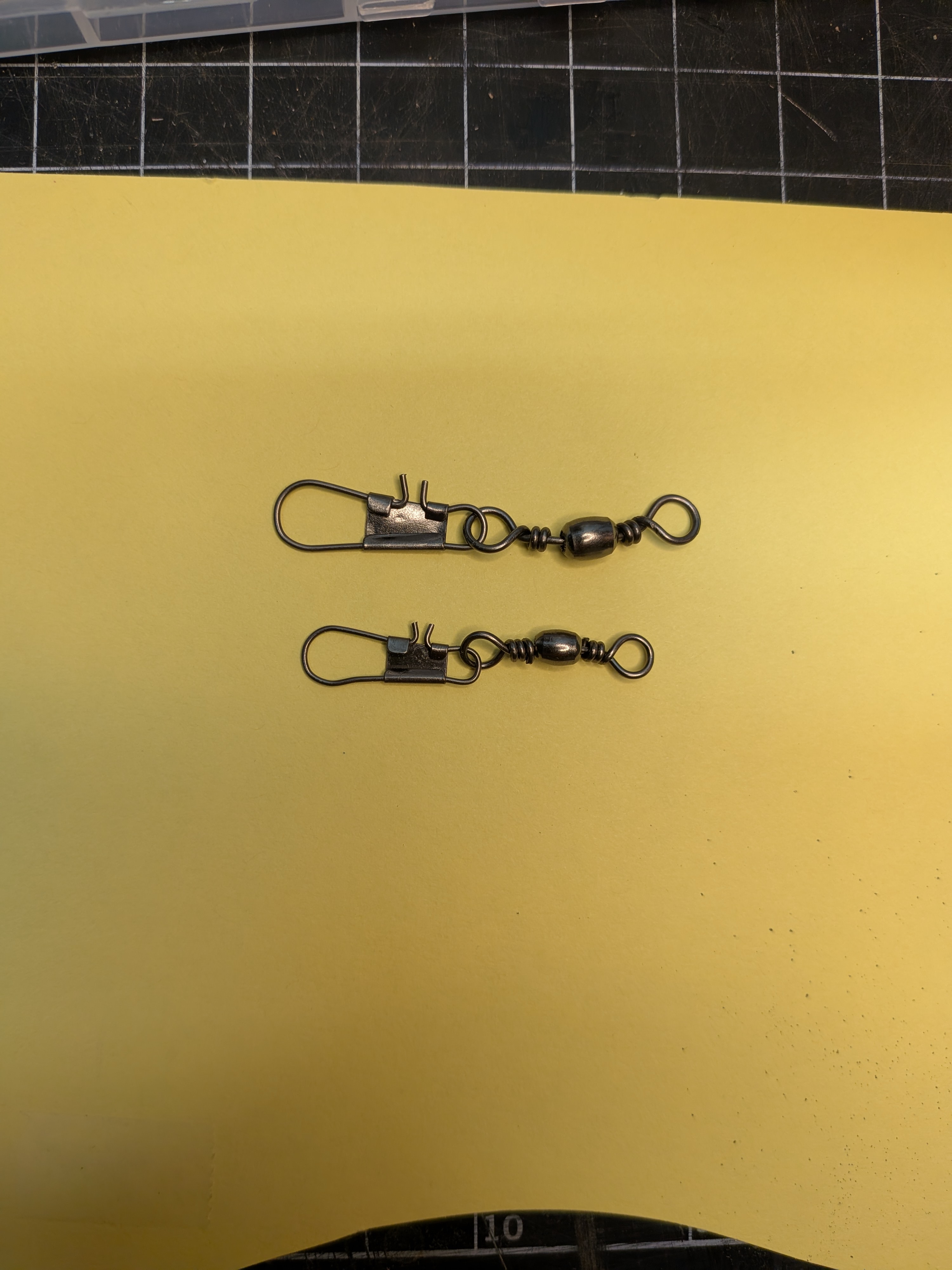
Quote from Eric Becher on August 20, 2026, 8:13 pmThose are for low power rockets (or low power fish).
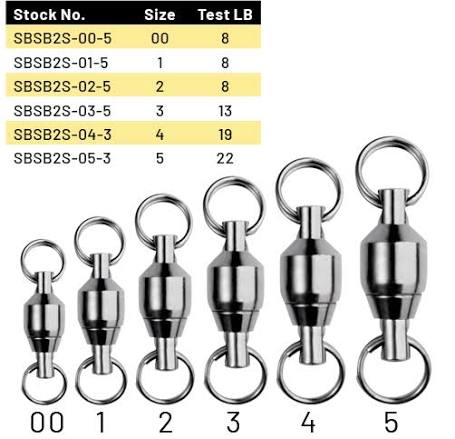
Mid power, you want these pictured below (in the pics with multiples).
For high power you want the big ones (like the single picture below), although in my few HP rockets I don't bother with swivels.
You can get on Amazon, Wal-mart, or fishing and hardware stores. You can also get some of them at Apogee, Wildman or One Bad Hawk, but they will have higher prices.
Those are for low power rockets (or low power fish).
Mid power, you want these pictured below (in the pics with multiples).
For high power you want the big ones (like the single picture below), although in my few HP rockets I don't bother with swivels.
You can get on Amazon, Wal-mart, or fishing and hardware stores. You can also get some of them at Apogee, Wildman or One Bad Hawk, but they will have higher prices.
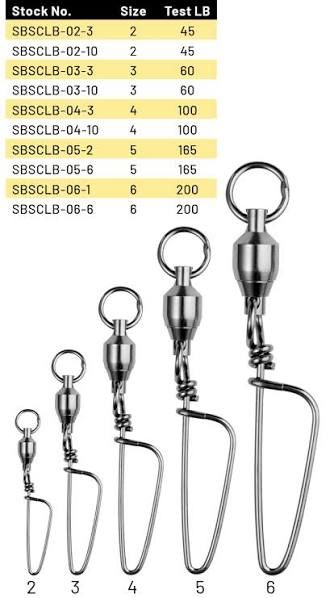
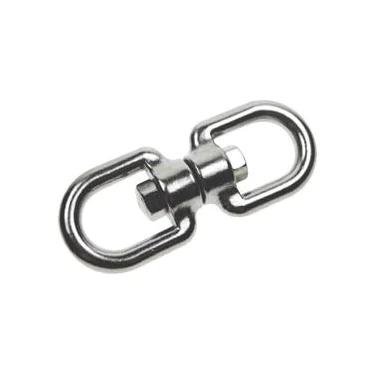
Quote from Admin on August 21, 2026, 8:12 amDitto what Eric said. The latter photo he provided will have the best strength.
Somewhere, I have a cache of swivels that Teddy gave me. He's no longer selling these particular swivels because I believe his supplier dried up. I'll find a few and get them to you.
https://www.mcmaster.com/products/swivels/swivels-1~/
The top of that page has eye-to-eye swivels. The 316 stainless steel swivels come in a number of smaller "rocketry-friendly" sizes.
Ditto what Eric said. The latter photo he provided will have the best strength.
Somewhere, I have a cache of swivels that Teddy gave me. He's no longer selling these particular swivels because I believe his supplier dried up. I'll find a few and get them to you.
https://www.mcmaster.com/products/swivels/swivels-1~/
The top of that page has eye-to-eye swivels. The 316 stainless steel swivels come in a number of smaller "rocketry-friendly" sizes.